
Gabe Silverstein
April 21, 2026 • 7 min read
I just got back from Japan. Here's why the country is so clean.
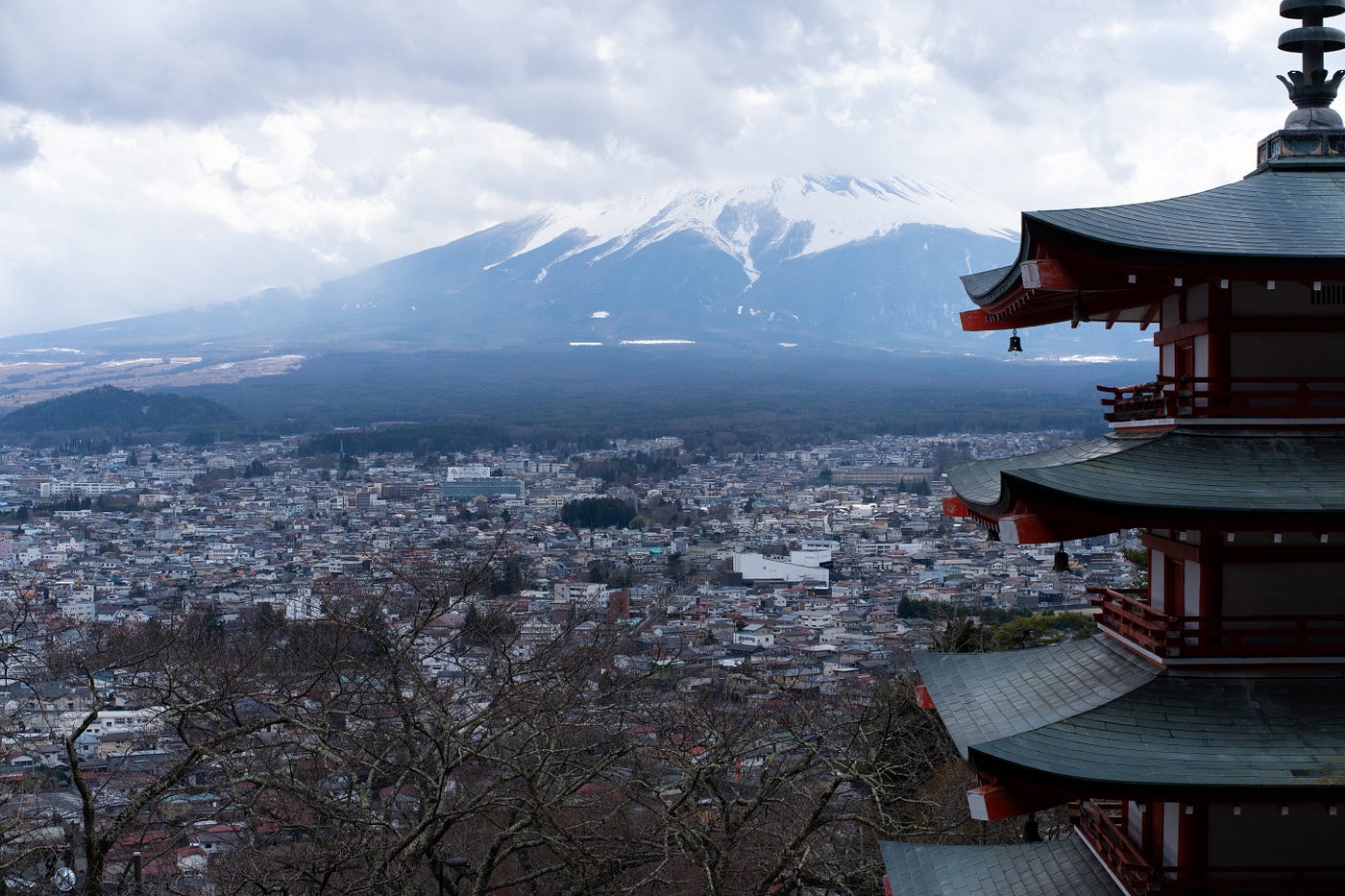
Fujikawaguchiko view of Mt. Fuji — Photo Credit: Author
After months of planning, booking, and prep work, my brother and I just returned from our dream Japan trip.
It was restorative, beautiful, refreshing, and a little cold. We went in early March, just before sakura season. Yes, we did manage to catch several cherry blossoms in bloom. I brought my Sony camera and was prepared to capture photography of the landscapes, streets and Mt. Fuji.
After I travel, I like to keep a journal of my adventures, the stories, the jokes, the good times, and also, the insights and takeaways.
I believe traveling, especially out in nature and away from your city, is one of the best ways to detox from the noise of daily life and the restlessness of the digital world. Ironically, Tokyo is one of the largest megacities on earth — and somehow, it still felt like an escape from my home city of LA. A very different city.
I'll be sharing several takeaways over the coming weeks, including how to actually be on vacation mentally while you're on vacation physically.
If Japan wasn't already on your travel list, I hope to change that — starting now.
Why is LA so dirty?
Before we talk about how Japan is so clean. Let's talk a bit about why Los Angeles, my home town, is so filthy.
If you didn't already know, Japan is an exceptionally clean country: trash wise, dust, dirt, pollution — it is visibly, undeniably clean. I was born, raised, and still live in the Los Angeles area, so you probably already know where I'm going with this.
LA is, to put it lightly, a dirty city. Trash lines nearly every street outside of Beverly Hills, Bel Air and a handful of well-managed privately funded neighborhoods. The roads are full of what I call "Mexicars" — Hondas with Ferrari badges, Honda Civics with ridiculous spoilers, cars that have clearly been in major accidents and are still being driven with the bumper scraping the pavement. Whether the owner couldn't afford to fix it, didn't have insurance, or simply pocketed the settlement — it's a common sight. In a city where drivers are famously aggressive, self-absorbed, and short on patience for anyone else on the road, maybe it all tracks.
Alas, this article could go on forever, or it could be very short.
It really comes down to four things: leadership, people, culture, attitude, and societal expectations.
How is Japan so clean?
One of the primary reasons Japan is so clean is its people and its culture — a deeply collectivist society where your presentation and behavior reflect not just on you, but on everyone around you.
There are also several other core popular explanations why Japan is such a clean country:
- No eating while walking: consuming food on the go is considered rude, which dramatically cuts down on wrappers, containers, and street litter
- Trash cans are rare: removed after the 1995 Tokyo subway attack, yet streets stay spotless because people carry their trash home. Good places to find trash cans are often near their famous vending machines or in convenience stores like 7-Eleven, Lawson, or Family Mart.
- Kids clean their own schools: from elementary school onward, students are responsible for cleaning their classrooms, hallways, and bathrooms every day. No janitors. The habit and the mindset are built in long before adulthood
- Sōji time: 15 minutes of structured cleaning is built into the school day, every day, for every student
- Business opening and closing rituals: sweeping the storefront and surrounding sidewalk is standard practice, not an optional courtesy
- Neighborhood cleaning rotations: many residential areas have scheduled communal cleaning days where residents collectively maintain shared spaces
- Cleaning as spiritual practice: rooted in Shinto and Buddhist tradition, cleanliness is tied to spiritual purity. Sweeping and tidying are acts of mindfulness
In Japan, if you look like a mess, you are a mess. In LA, if you look like a mess, you might be homeless, or you might be worth $40 million.
In LA, the primary "currency" is status. In Japan, the primary currency is honor, hard work, and self respect.
It's actually why Lexus was created the way it was — a premium Toyota built specifically for export, because Japanese consumers didn't need a rebrand to respect quality. In Japan, Lexus models were sold as Toyotas. Even the Toyota Crown — built for the taxi fleet — and the Toyota Century, which is essentially a Japanese Rolls-Royce (no offense, England), carry the Toyota name proudly. The badge doesn't need to change because the standard is already there.
Japanese culture prioritizes reliability, efficiency, and collective well-being. Los Angeles, broadly speaking, prioritizes status, visibility, and individual glory.
In three full weeks across Japan, I saw a grand total of three dirty cars and two homeless people.
Three dirty cars. In three weeks?! How is that even possible?
Japan has strict vehicle regulations and mandates personal car inspections every two years. The taxi fleet, most of which consists of 1995 Toyota Crown Comforts, is required to be meticulously maintained. Drivers hand-wash their cabs every night. That's why you don't see the swirl marks and micro-scratches that define every car that's been through an American drive-through wash.
Any imperfection left unaddressed is a reflection of the person or business — and in Japan, that's unacceptable.
This is perhaps the most defining difference between Japan and LA, and it's the foundational difference beneath everything I've described.
If a storefront is dirty, it says something about the owner. If a surface is cracked, if a tile is broken, if a car is dinged and left that way — it reflects on the person or company responsible for it.
I am not going to pretend I did not see a single piece of trash the entire trip — a soda can, wrapper, and a few pieces of trash. In the two weeks we were there, about all the trash I saw with my own eyes could fit in one large trash bag. I could definitely not say the same thing about LA.
In two weeks of riding trains across the country — trains operated by private companies, not the government — I do not remember seeing any graffiti, etchings, or trash in the train stations or public restrooms.
This cultural standard, reflected on the individual, is what keeps Japan clean at a level no city ordinance or sanitation budget could replicate on its own.
Tikun Olam
In Judaism there is a concept called "Tikun Olam": repairing the world. Many misinterpret it as doing charity work and charitable acts. The true intended meaning is actually repairing ourselves, first. Essentially, being the change you wish to see. You cannot be in a relationship if you are lacking in yourself.
We cannot have a people or a strong society if we are not repaired ourselves and on a path and trajectory to conquering our life mission.
Japan reflects this core ideology. The reason the city is so clean is because of its collectivist societal ideology. Cleanliness lends to a clear and calm mind. This in turn reflects back into your and society's well-being.
When there is filth and disorder, there is chaos.
Jordan Peterson echoes this concept in his bestselling book, 12 Rules for Life: Get your house in order before you criticize the world!
The mind naturally defaults to putting order to chaos and the world. It's one of the reasons we love puzzles, solve problems, love nature and adventure. We are naturally drawn to truth, adventure, and meaning. It is why we naturally see faces and patterns in random things.
Japanese understand this core belief: that cleanliness and structure cannot be maintained from the top down. Rather, it must be internalized and believed on an individual level. Once everyone believes and acts this way, then society as a whole represents it.
A story to close — my brother and I laughed over one that encapsulates this:
We were in the Kyoto Railway Museum (which we were going to skip but went anyway, thinking it was going to be for train nerds). The train system is comparable to Japan's circulatory system, keeping the country exactly on time, moving forward and connected. We were walking down the outdoor bridge to view the original Kyoto Railway Roundhouse + Turntable when we saw a museum worker walking towards us.
She was walking briskly toward us, wiping the handrails with two microfiber cloths, wearing a mask. She gave us a genuine smile and said, "Arigatō gozaimasu!" — which means "thank you very much!"
Kindness, friendliness, cleanliness, happiness, respect, and pride, always.
If you enjoyed this article, consider liking, commenting and sharing.
I really appreciate it!
Originally published April 21st, 2026 | © Gabe Silverstein 2026